
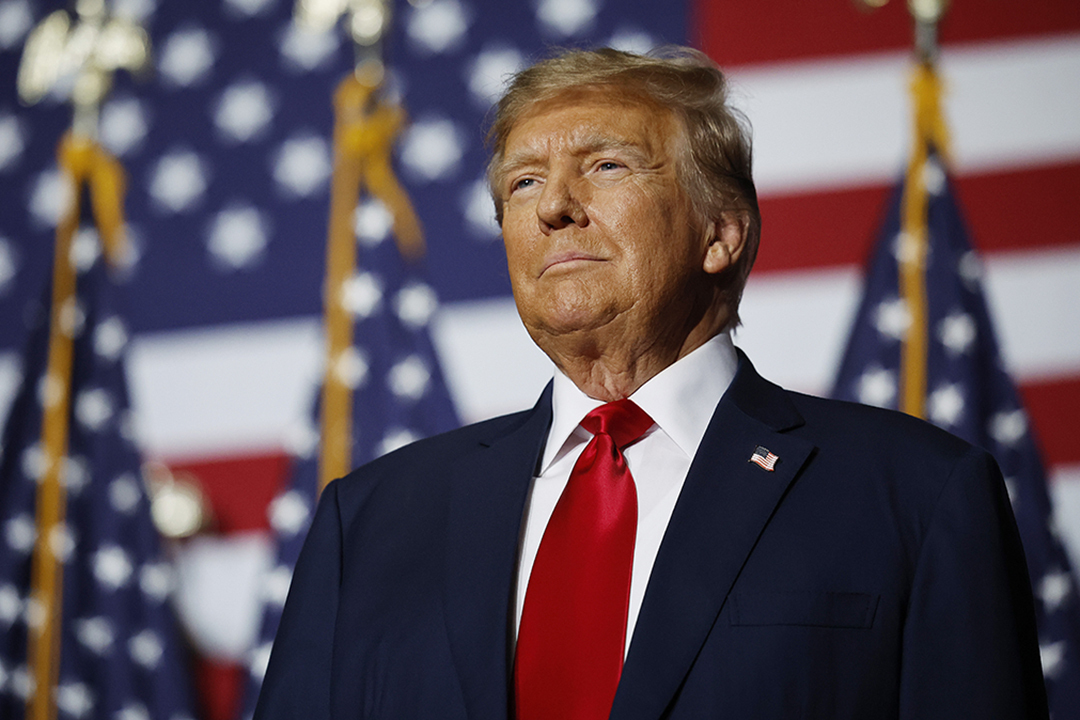
US President-elect Donald Trump met with TikTok CEO Shou Zi Chew at his Mar-a-Lago estate in Florida on Monday, as the social media giant fights to prevent a looming ban in the United States.
The meeting comes amid rising tensions over a law passed earlier this year that mandates TikTok’s Chinese parent company, ByteDance, to sell the platform before 19 January or face a nationwide ban. TikTok has denied allegations of links to the Chinese state, maintaining that the ban is unfounded.
TikTok recently submitted an emergency application to the US Supreme Court seeking a delay on the enforcement of the ban, citing its impact on free speech and the platform’s vast user base. In its filing, TikTok described itself as “one of the most significant speech platforms” in the United States and warned of “immediate irreparable harm” to the company and its users should the ban proceed.
The company also argued that a “modest delay” would provide sufficient time for the Supreme Court to review the case and allow the incoming Trump administration to assess the situation.
President-elect Trump, who has previously supported efforts to ban TikTok during his first term, now opposes the ban. His stance has shifted partly due to concerns that banning TikTok would benefit rival social media platforms like Facebook, which he has accused of contributing to his 2020 election loss.
Speaking at a press conference on Monday, Trump acknowledged TikTok’s significance, saying, “I have a warm spot in my heart for TikTok, because I won youth by 34 points… TikTok had an impact.” While a majority of younger voters (aged 18 to 29) supported Trump’s opponent, Vice President Kamala Harris, the 2024 election saw a notable shift toward Trump among young voters, a demographic where TikTok holds considerable influence.
TikTok, which Trump officially joined in June, quickly became an essential part of his campaign strategy, helping him amass millions of followers in a short period.
Earlier this month, TikTok’s efforts to overturn the ban were rejected by a federal appeals court, which upheld the law, citing it as “the culmination of extensive, bipartisan action by the Congress and by successive presidents.”
With the 19 January deadline approaching just one day before Trump’s inauguration, all eyes are now on the Supreme Court and the incoming administration for a final resolution to this high-stakes battle.